
You’ve heard the protein advice. You’re hitting your targets. You’re consistent with workouts, sleep is reasonable, and you’re being honest with yourself about your habits. So why has progress slowed?
If your body feels like it’s working against you, the issue may not be effort. It may be the omega-6 to omega-3 ratio — a marker almost no one is testing for, and one of the most overlooked drivers of a stalled weight loss plateau, sluggish recovery, and quiet, low-grade cellular inflammation.
At Momentum Integrative Wellness in Stuart, FL, we look at the numbers most clinics never check — because the environment inside your body is what determines whether your effort actually produces results.
Table of Contents
Why Protein Isn’t Always the Reason Weight Loss Stalls
Protein matters. It preserves lean muscle, supports metabolism, improves recovery, and keeps you fuller longer. If you’re in a fat loss phase, hitting your protein target is non-negotiable.
But protein isn’t the whole story. We see it constantly — clients doing everything right, eating clean, training smart, sleeping well — and still feeling like the needle won’t move the way it used to. The frustrating part isn’t a lack of effort. It’s that the internal environment hasn’t been addressed yet.
That’s where one specific marker quietly enters the picture: the ratio of two essential fats your body cannot make on its own. Get the balance right, and your biology starts cooperating. Leave it unchecked, and your effort produces a fraction of the result it should.
What the Omega-6 to Omega-3 Ratio Actually Measures
Omega-6 and omega-3 are essential fatty acids — the body cannot produce them, so they must come from food. They both serve real, necessary roles. The issue is not that omega-6 is “bad” and omega-3 is “good.” The issue is balance.
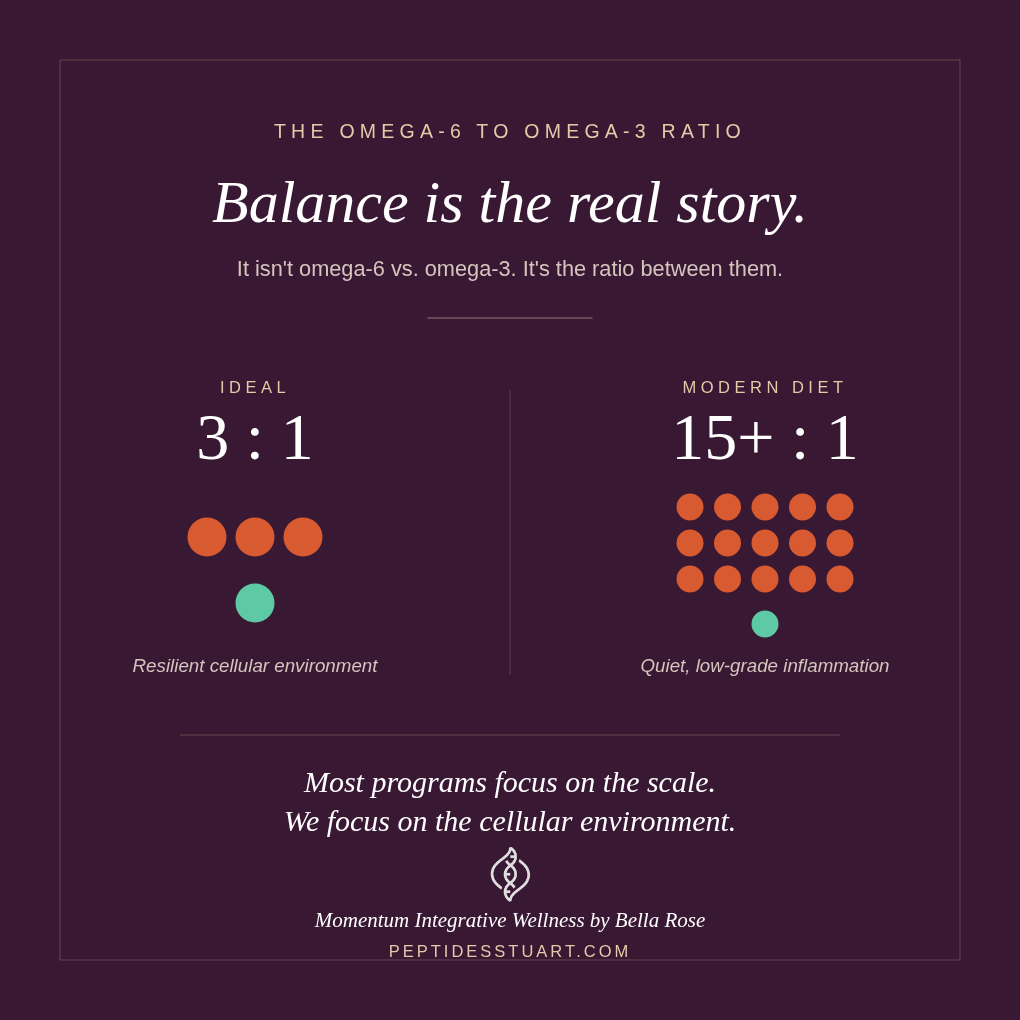
In excess, omega-6 tends to lean inflammatory. Omega-3 helps create a more balanced, resilient internal environment. The ideal omega-6 to omega-3 ratio is around 3:1. Thanks to the modern food supply — heavy in seed oils, processed foods, and grain-fed proteins — many people are walking around with ratios many times higher than that, even those who consider themselves to eat relatively clean.
This is one of those numbers that almost nobody is testing… except us. Most programs focus on the scale. We focus on the cellular environment that decides what the scale will let you do.
For more on the role of omega-3 fatty acids in human health, see the National Institutes of Health Office of Dietary Supplements fact sheet on omega-3s.
How an Off-Balance Omega-6 to Omega-3 Ratio Quietly Sabotages Fat Loss
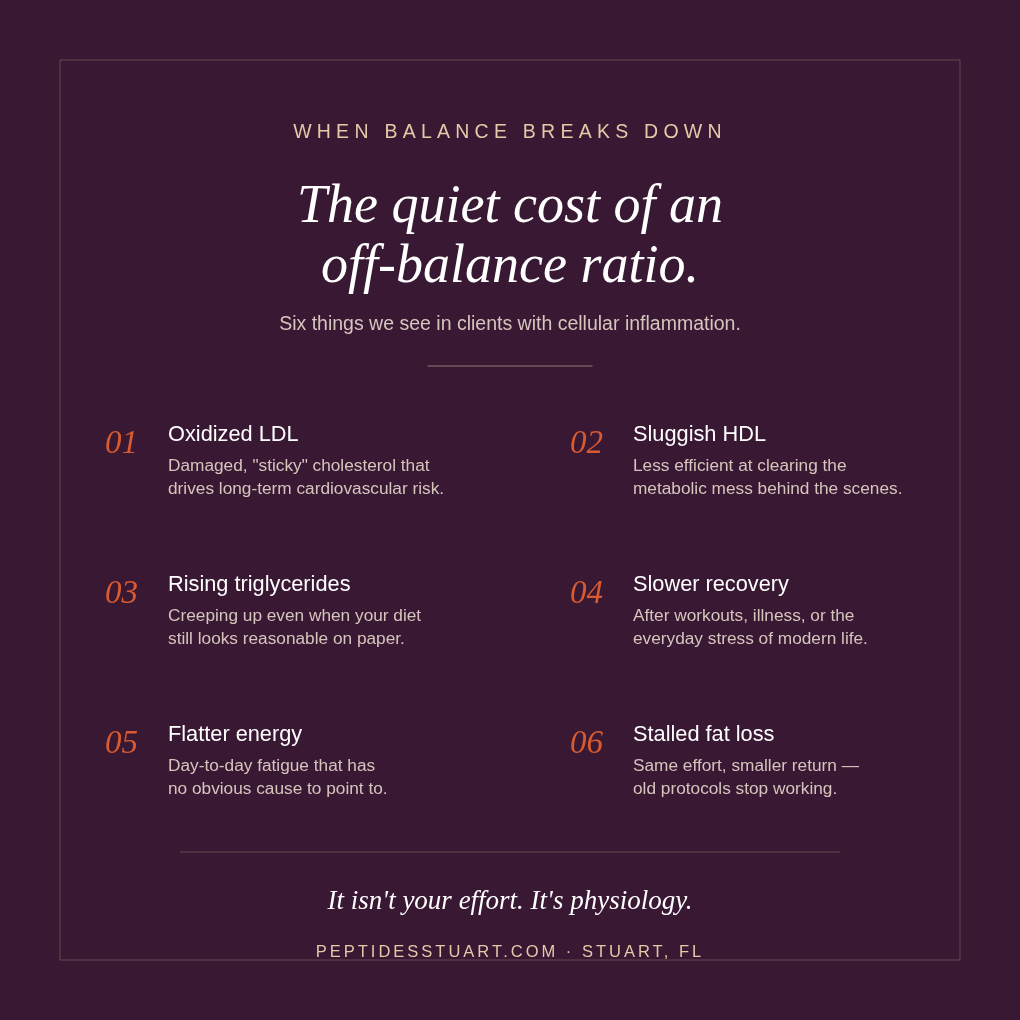
When the ratio is off, it can drive ongoing low-grade cellular inflammation. Not the obvious, you-feel-sick kind — the quieter kind that changes how efficiently your body works behind the scenes.
Here is what we often see in clients with an unbalanced ratio:
- LDL becomes more likely to oxidize — meaning damaged, “sticky” cholesterol that contributes to long-term cardiovascular risk.
- HDL becomes less efficient at cleaning up the metabolic mess.
- Triglycerides begin to rise, even when diet looks reasonable.
- Recovery feels slower after workouts, illness, or stress.
- Energy feels flatter day to day.
- Fat loss feels harder than it should — and the body resists the same protocols that used to work.
The Cell Membrane: The Doorway You Forgot About
An off-balance ratio also affects the membrane of every cell in your body. Think of the cell membrane as the doorway. Nutrients need to get in. Waste and inflammatory signals need to get out. Hormones, medications, and peptides all rely on healthy signaling across that membrane.
When the membrane becomes too rigid from poor fatty acid balance, communication slows down. You may be eating the protein, doing the workouts, staying consistent — and still not getting the full return on your effort. As one expert put it: “The gains you’re getting are only a fraction of the gains you’re potentially capable of.”
Why We Test This Between Weeks 6 and 12 of Your Journey
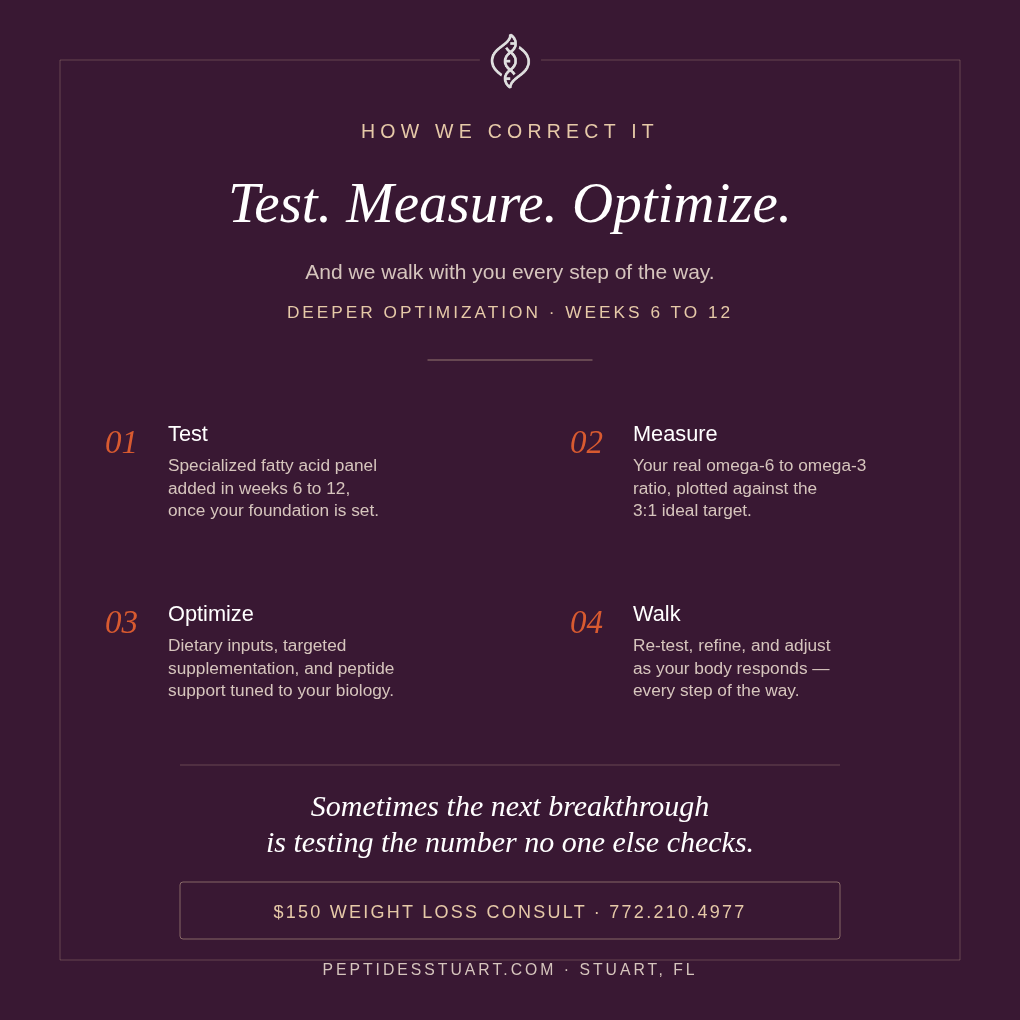
This isn’t a starting-line conversation. It’s a deeper-optimization conversation. Somewhere between weeks 6 and 12 of a client journey at Momentum, after the foundation is in place — appetite regulated, basics dialed in, body composition trending in the right direction — we begin looking at the markers that quietly elevate results from “good” to “what your biology is actually capable of.”
The omega-6 to omega-3 ratio is one of the first refinements we look at in that window. Because at that point, more restriction usually isn’t the answer. More precision is.
This is the part of medicine almost no one talks about: the part where the work shifts from losing pounds to building a body that supports a longer, stronger, healthier life.
Beyond the Scale: Body Composition, Healthspan, and Longevity
We don’t just teach fat loss at Momentum. We teach body composition enhancement. We teach healthspan strategy. We teach how to build a body that supports the next 10, 20, 30 years of how you want to live.
That’s why the omega-6 to omega-3 ratio matters so much during medical weight loss specifically. When you’re working to preserve muscle, improve insulin signaling, and protect long-term cardiovascular and metabolic health, an inflamed cellular environment will quietly cap how much progress your body will allow. Correcting the balance opens the door — to better hormone signaling, better peptide response, better recovery, and better composition.
If you’d like to read more about the precision approach we use, our medical weight loss program in Stuart, FL walks through how GLP-1 peptide therapy and biomarker testing fit together.
How to Get Your Omega-6 to Omega-3 Ratio Tested in Stuart, FL
Sometimes the next breakthrough is not more restriction. Sometimes it’s testing the number no one else is talking about.
At Momentum, we believe longevity leaves clues. We help you find them — through real labs, real biomarkers, and a real medical team that walks with you every step of the way. Test, don’t guess. Work with your biology, not against it.
If you’ve been doing the work and not getting the result, your omega-6 to omega-3 ratio is one of several markers worth investigating. We’d love to walk you through it.
Frequently Asked Questions About the Omega-6 to Omega-3 Ratio
What is a healthy omega-6 to omega-3 ratio?
The generally accepted target is around 3:1 (omega-6 to omega-3). Most modern Western diets push that ratio dramatically higher, which can drive low-grade cellular inflammation, slower recovery, and a quietly less responsive metabolism.
Can omega-6 and omega-3 imbalance affect weight loss?
Yes. An off-balance ratio contributes to chronic low-grade inflammation, less efficient cell membranes, and disrupted handling of cholesterol and triglycerides. All of that can make fat loss feel harder than it should — even when diet, training, and sleep look right on paper.
How is the omega-6 to omega-3 ratio tested?
It’s measured through a specialized fatty acid blood test, not a standard lipid panel. At Momentum Integrative Wellness, we incorporate this test into our deeper optimization phase — typically between weeks 6 and 12 of a personalized weight loss journey, alongside other biomarkers that influence body composition and longevity.
Is correcting my omega-6 to omega-3 ratio enough on its own?
Rarely. The ratio is one piece of a larger optimization picture. Sustainable fat loss and long-term health depend on hormones, insulin signaling, sleep, stress, lean muscle, gut health, and cellular function working together. That’s why we use individualized protocols rather than one-size-fits-all programs.
Where can I get the omega-6 to omega-3 ratio test in Stuart, FL?
Right here at Momentum Integrative Wellness by Bella Rose, located at 2440 SE Federal Highway, Suite 600 in Stuart, FL. Call 772.210.4977 or visit PeptidesStuart.com to schedule a consultation.
Medical services are provided by licensed healthcare professionals following appropriate clinical evaluation.
Medically reviewed by Stephanie Tippett, MSN, FNP-C (“Miss Bella Rose”) — double board-certified Nurse Practitioner with 16+ years in regenerative and aesthetic medicine. Last reviewed: April 29, 2026.
Educational disclaimer. This article is provided for general educational and informational purposes only. It is not intended to diagnose, treat, cure, or prevent any disease, and it is not a substitute for individualized medical advice from a licensed healthcare provider. Please consult your physician or a qualified clinician before making changes to your diet, supplementation, or treatment protocols — particularly if you have existing cardiovascular, metabolic, or hormonal conditions.
Individual results vary. All clinical services at Momentum Integrative Wellness by Bella Rose are provided by licensed healthcare professionals after appropriate evaluation. Outcomes depend on individual physiology, adherence, and the specific protocol your provider determines is medically appropriate for you. Statements regarding peptides, supplements, and lifestyle interventions have not been evaluated by the FDA and are not intended to diagnose, treat, cure, or prevent any disease.
References
- Simopoulos AP. The importance of the ratio of omega-6/omega-3 essential fatty acids. Biomed Pharmacother. 2002;56(8):365–379. PubMed
- DiNicolantonio JJ, O’Keefe JH. Importance of maintaining a low omega-6/omega-3 ratio for reducing inflammation. Open Heart. 2018;5(2):e000946. Open Heart (BMJ)
- Calder PC. Omega-3 fatty acids and inflammatory processes. Nutrients. 2010;2(3):355–374. PMC
- National Institutes of Health, Office of Dietary Supplements. Omega-3 Fatty Acids — Fact Sheet for Health Professionals. ods.od.nih.gov
- Yates CM, Calder PC, Ed Rainger G. Pharmacology and therapeutics of omega-3 polyunsaturated fatty acids in chronic inflammatory disease. Pharmacol Ther. 2014;141(3):272–282. PubMed